
Temples
Shri Krishna Janmasthan: The Divine Heart of Mathura
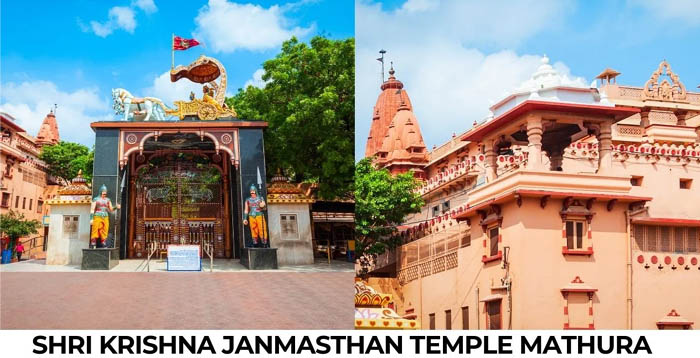
The Shri Krishna Janma Bhoomi Temple in Mathura is a sacred complex built on the exact spot where Lord Krishna is believed to have been born in the prison cell of King Kansa. It is a major pilgrimage site, considered the holiest place in Mathura and an important part of Braj Bhoomi, the region associated with Krishna's life. The complex includes the Keshavdev Temple, a prison cell (Garbh Griha), and the Bhagvata Bhavan, all holding deep spiritual significance for devotees.
Significance- Birthplace of Krishna: The temple is revered as the actual birthplace of Lord Krishna, a pivotal event in Hindu mythology.
- Historical Importance: Built on the site of King Kansa’s prison, highlighting Krishna’s divine purpose to destroy evil and establish righteousness.
- Spiritual Hub: A key destination in the Braj region and a vital pilgrimage site for Hindus worldwide.
- Garbh Griha (Prison cell): The focal point believed to be the exact prison cell where Lord Krishna was born.
- Keshavdev Temple: A temple within the complex dedicated to Lord Krishna.
- Bhagvata Bhavan: Another significant shrine located inside the complex.
- Architecture & Art: The complex contains architectural details, ancient murals, and inscriptions — including verses from the Bhagavad Gita on copper plates.
- Location: Katra Keshav Dev area, Mathura.
- Timings: Opening hours vary seasonally with morning and evening darshan sessions. Example (winter timings):
- Morning: 6:00 AM – 12:00 PM
- Evening: 3:00 PM – 8:30 PM
- Mathura: One of India’s holiest cities, deeply connected with Lord Krishna’s life and legends.
- Surroundings: The area around the temple is rich in history and mythological sites related to Krishna and Braj Bhoomi.
Nathdwara, Rajasthan
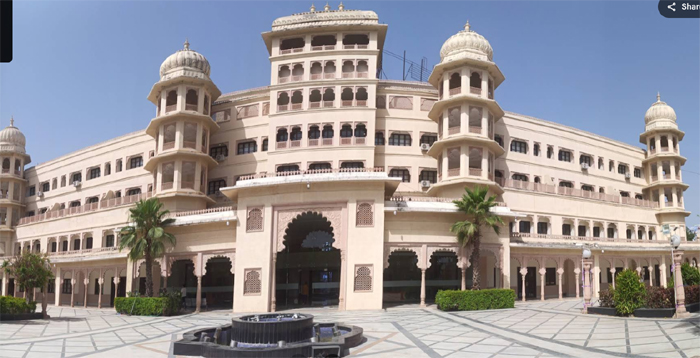
The Shreenathji Temple in Nathdwara, Rajasthan, is one of the most revered Vaishnavite pilgrimage sites, dedicated to Lord Krishna in his Shreenathji form—depicted as a young boy lifting Govardhan Hill.
History & Significance
- The idol of Shreenathji was originally worshipped at Govardhan Hill, Mathura, but was moved in 1672 A.D. to Nathdwara to protect it from Mughal emperor Aurangzeb.
- The temple was built at the spot where the chariot carrying Shreenathji’s idol got stuck in the mud—believed to be a divine sign that Krishna wished to reside there. - The temple follows the Pushtimarg sect, founded by Vallabhacharya, emphasizing **bhakti (devotion) and seva (service).
Temple Rituals & Architecture
- The temple is designed in Haveli-style architecture, resembling a royal palace.
- Eight daily darshans reflect different moments of Krishna’s day, including Mangala, Shringar, Rajbhog, and Shayan.
- Devotees believe Shreenathji is a living deity, interacting with his followers through divine experiences. Festivals & Celebrations
- Major festivals include Janmashtami, Holi, and Annakut, celebrated with grandeur.
- The temple attracts thousands of devotees, especially during Govardhan Puja, when Krishna’s lifting of the hill is commemorated.